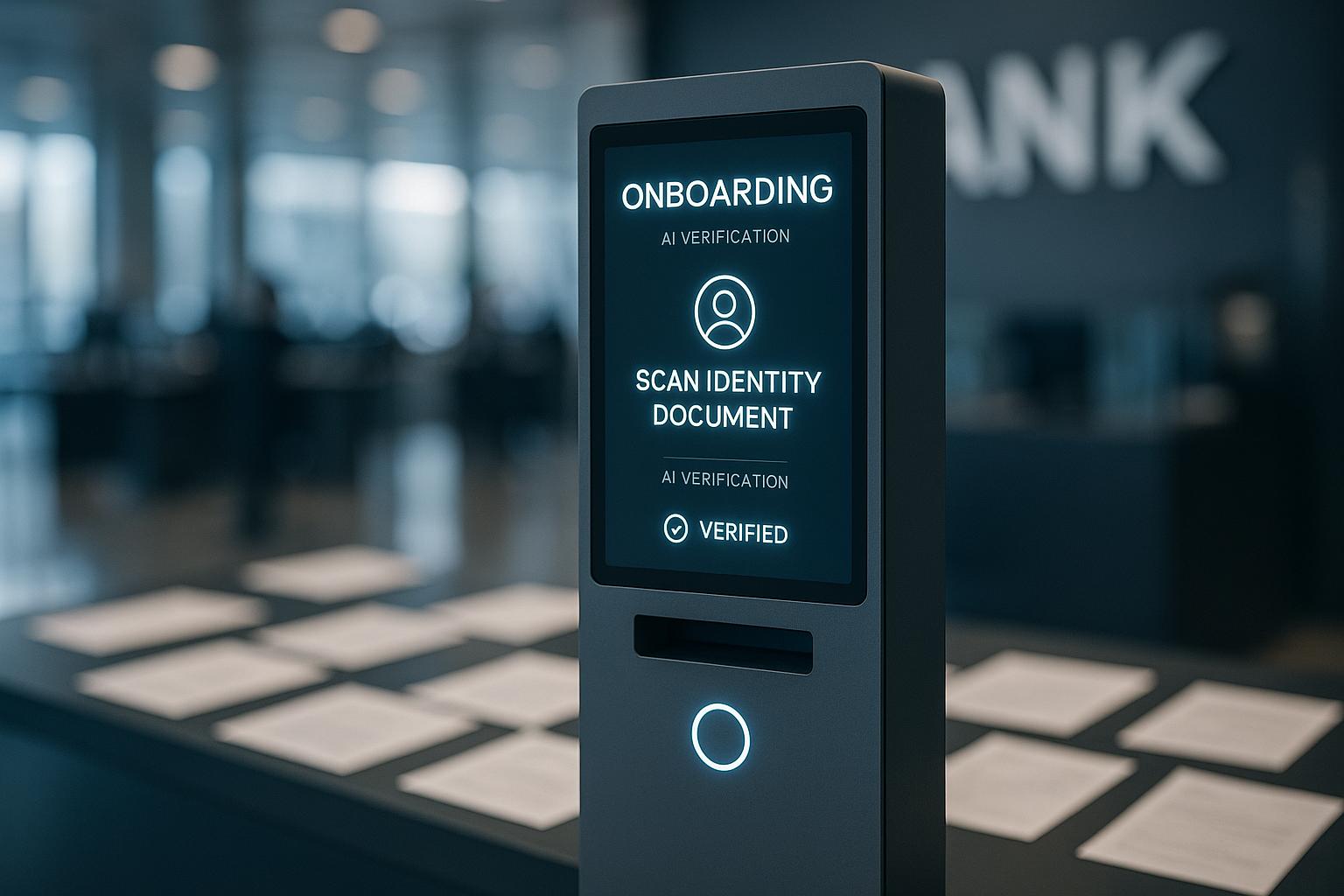
Every digital product begins with a single fragile moment of trust: a user hands over an identity document or a selfie and expects verification to happen quickly, quietly and correctly. According to the original report, automated identity verification platforms such as AU10TIX aim to make that exchange nearly invisible to legitimate users while surfacing compliance and fraud risks for businesses. [1]
AU10TIX evolved from border-control and aviation-security technologies into a commercial identity platform that combines document forensics, optical character recognition (OCR), biometric matching and passive liveness checks to produce near-instant decisions. The platform’s distinguishing features include guided capture with real‑time feedback, multi-layer document authenticity analysis, encrypted face‑vector matching and decisioning that factors in sanctions and watchlists. These elements are designed to deliver approvals in seconds and detailed evidence when cases require escalation. According to the company, its SDKs and APIs support rapid integration across web and mobile environments. [1][2][5]
Market dynamics help explain the urgency. Industry data shows identity verification was a nearly USD 10 billion market in 2022 and is forecast to grow sharply as more transactions move online. That scale makes fast, reliable onboarding both a business opportunity and a compliance necessity across fintech, banking, gaming, mobility and government services. Vendors such as Jumio, Onfido and AU10TIX illustrate how verification has shifted from a back‑office control to a customer‑facing trust layer. [1]
Technically, AU10TIX and systems modelled on it operate in five broad stages: guided document capture with instant image quality checks and auto‑optimisation; multi‑layer forensic authentication that compares layouts, holograms and pixel‑level anomalies against thousands of templates; biometric comparison and passive liveness; risk orchestration tied to watchlists and consortium intelligence; and a fast final decision with audit artefacts for compliance teams. The company reports global document coverage and says its KYC AI runs more than 150 checks to detect forgery and manipulation. [1][5]
Biometrics are central but legally sensitive. Industry offerings now convert faces into encrypted embeddings for 1:1 comparison and rely on passive liveness , assessing micro‑movements, texture and depth cues , to avoid intrusive workflows. AU10TIX states its biometric stack uses NIST‑rated algorithms and delivers high detection accuracy while supporting GDPR, KYC and AML obligations; it also distributes functionality through SDKs to maintain a branded, cross‑platform user experience. These design choices aim to balance friction, accessibility and regulatory constraints. [3][4][2]
Fraud defences are moving beyond single‑signal checks. Automated platforms layer device fingerprinting, behavioural biometrics and graph‑based identity mapping so patterns across transactions and devices reveal coordinated attacks. Shared, privacy‑safe intelligence , hashed or tokenised signals contributed to consortium networks , increases detection accuracy for repeat offenders. AU10TIX emphasises a multimodal approach, and vendors increasingly couple automated scoring with human review for high‑risk or ambiguous cases. [1]
Operationalising these capabilities at scale calls for significant engineering investment: GPU‑accelerated inference for real‑time checks, streaming infrastructure for eventing, graph databases for link analysis, and hardened cloud deployments with HSMs and zero‑trust controls to meet regional data residency rules. Cost management strategies include progressive inference (lightweight models for routine cases, heavy analysis only for edge cases), auto‑scaling GPU capacity and model optimisations such as pruning and quantisation. [1]
Commercially, platforms blend SaaS subscriptions with per‑transaction pricing. Typical market ranges cited for verification services vary by complexity , simple ID scans to full biometric plus AML screening , and can be supplemented by enterprise contracts covering SLAs, monitoring and case management. Benchmark figures and public comparisons suggest attractive gross margins for well‑executed IDV businesses, and hybrid pricing helps capture both predictable recurring revenue and volume upside. [1]
Despite automation’s strengths, challenges remain. Regulators differ on biometric rules (GDPR, CCPA, BIPA, PDPA), fraud techniques evolve rapidly with generative AI, and isolated systems lose the advantage of shared intelligence. The recommended engineering and governance responses include embedding geo‑aware data routing and consent tooling in the architecture, continuous adversarial model training, privacy‑preserving intelligence sharing, and controlled threat simulation to stress‑test defences. [1]
In practice, AU10TIX positions its product family , from selfie and biometric verification to video plus human‑in‑the‑loop workflows , as a configurable toolkit for enterprises that must demonstrate both speed and auditability. The vendor highlights extensive country and document coverage, modular SDKs for quick integration, and video and live‑agent options where regulation or risk profiles demand recorded proof and human oversight. Organisations adopting such systems should weigh integration effort, regulatory obligations and the benefits of consortium data against the operational and privacy costs of running forensic‑grade verification at scale. [2][3][4][5][7]
📌 Reference Map:
##Reference Map:
- [1] (IdeaUsher blog) - Paragraph 1, Paragraph 2, Paragraph 4, Paragraph 6, Paragraph 7, Paragraph 8, Paragraph 9, Paragraph 10
- [2] (AU10TIX SDK page) - Paragraph 2, Paragraph 10
- [3] (AU10TIX Selfie verification) - Paragraph 5, Paragraph 10
- [4] (AU10TIX Biometric verification) - Paragraph 5, Paragraph 10
- [5] (AU10TIX KYC AI) - Paragraph 2, Paragraph 4, Paragraph 10
- [7] (AU10TIX Video) - Paragraph 10
Source: Noah Wire Services