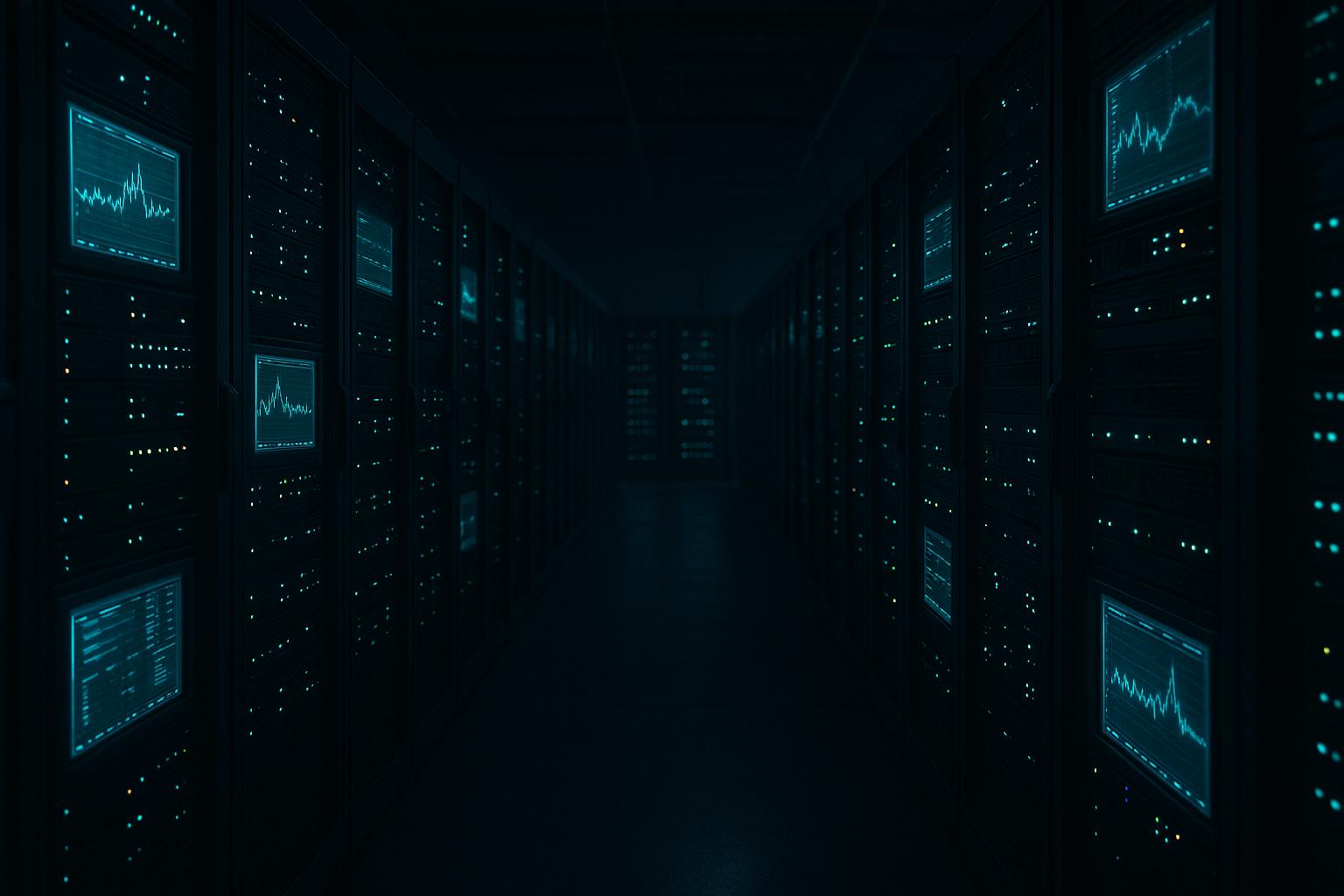
AI-driven cyber defence is reshaping how organisations detect, investigate and contain attacks , and the case for building platforms “like Darktrace” is now grounded in both operational need and market opportunity. Cyber threats no longer follow predictable signatures; instead, they hide in subtle deviations of user, device and application behaviour. According to the original report, a Darktrace-like AI security platform uses self‑learning machine learning, behavioural analytics and real‑time telemetry to learn what “normal” looks like for each element of a digital estate and to surface anomalies before they escalate into breaches. [1][2][3]
At its core such a platform collects continuous telemetry across networks, cloud workloads, identities, endpoints, applications and OT systems to form a living behavioural map. The lead article describes how self‑learning models build baselines without relying on static rules or signatures, then apply contextual anomaly scoring and cross‑domain correlation to expose multi‑stage attack paths that conventional tools tend to miss. Industry vendor descriptions confirm this multi‑domain approach is now standard practice for ActiveAI platforms that span network, cloud, email, identity and endpoint protections. [1][3][4]
The practical value of this model is reflected in market data and customer adoption. The lead summary cites a 2024 market valuation of roughly USD 25.35 billion for AI in cybersecurity, with projected growth to about USD 93.75 billion by 2030 and compound annual growth near 24.4%. It also reports high levels of investment and adoption among IT leaders , figures the original piece uses to argue a strong commercial case for new entrants. Platform vendors similarly point to thousands of customers and enterprise deployments as evidence that self‑learning AI can operate at scale without disrupting business operations. [1][2]
Functionally, a Darktrace‑like product emphasises several linked capabilities: self‑learning behavioural baselining, real‑time anomaly detection, autonomous precision containment, and AI‑driven automated investigation (the “Cyber AI Analyst” pattern referenced in the lead). These elements combine to reduce alert fatigue, speed triage and allow containment decisions at machine speed while preserving business continuity. Vendor platform materials underscore the same feature set, and list ancillary services such as managed detection and incident readiness to support operational adoption. [1][3][4]
Building such a platform is non‑trivial: the lead article lays out an end‑to‑end development roadmap , from consultation and requirements analysis to detection engine development, model training, autonomous response logic and continuous optimisation. It highlights the technical building blocks most commonly used in practice (TensorFlow, PyTorch, Kafka, Elasticsearch, Kubernetes, Zeek/Suricata and cloud MLops tools), and stresses the importance of data quality, pipeline scalability and iterative behavioural calibration to control false positives and maintain model fidelity as environments change. Public vendor documentation corroborates the emphasis on scalable telemetry, model lifecycle tooling and multi‑domain integration. [1][3]
Cost and go‑to‑market considerations matter. The lead article provides a conservative development‑cost band ($68k–$130k) for a baseline implementation while emphasising factors that inflate cost: scope, data volume and quality, model sophistication, integration work and regulatory requirements. From a commercial viewpoint it recommends recurring subscription, usage‑based and enterprise licensing models, supplemented by professional services for deployment and tuning , a mix that aligns with how established AI security providers monetise their platforms. Market sizing in the lead piece and industry spending projections underline the revenue potential for entrants that can capture even a small share of global cybersecurity budgets. [1]
Operational challenges are emphasised as well: sustained ingestion of high‑volume telemetry, engineering low‑latency analytics for machine‑speed response, avoiding learning gaps as environments shift, and integrating into heterogeneous security stacks. The lead article describes practical mitigations , resilient ingestion layers, progressive retraining, adaptive thresholding and API‑first integrations with SIEM/XDR/firewall ecosystems , approaches reflected in vendor product portfolios and professional service offerings. These design choices determine whether a platform becomes a force multiplier for security operations or an additional source of noise. [1][3][4]
Sector use cases illustrate where behavioural AI delivers the clearest returns: healthcare (ransomware and medical device protection), finance (fraud and privilege misuse), government (federal and regulated environments), energy/OT (industrial control threats) and large cloud‑native SaaS providers (workload and API misuse detection). The lead article supplies several vendor and customer examples demonstrating how AI platforms have detected and contained active attacks or rapidly surfaced configuration and exposure issues , reinforcing that cross‑domain visibility and machine‑assisted investigation are decisive advantages in these sectors. [1][4]
Responsible design and governance must accompany capability. The lead article stresses transparency, explainability and calibration as central to trust , a point echoed by vendor platforms that position self‑learning AI as augmenting, rather than replacing, human analysts. For organisations building or buying a Darktrace‑like platform, the imperative is clear: invest in data stewardship, model validation and operational playbooks so autonomous actions remain precise, auditable and aligned with business risk tolerance. [1][2][3]
In sum, the technical blueprint and market rationale are well established: modern AI security platforms fuse continuous telemetry, adaptive behavioural models and automated investigation to detect novel threats and reduce operational burden. The lead article provides a practical path to build such a system, while vendor resources show how those capabilities are packaged, supported and delivered at scale. For organisations weighing build versus buy, the decision will hinge on data readiness, engineering capacity and the ability to sustain iterative model operations , but the business case for behaviourally driven, machine‑speed defence is now mainstream. [1][2][3][4]
📌 Reference Map:
##Reference Map:
- [1] (IdeaUsher blog) - Paragraph 1, Paragraph 2, Paragraph 3, Paragraph 4, Paragraph 5, Paragraph 6, Paragraph 7, Paragraph 8, Paragraph 9, Paragraph 10
- [2] (Darktrace corporate site) - Paragraph 1, Paragraph 3, Paragraph 9
- [3] (Darktrace platform page) - Paragraph 2, Paragraph 4, Paragraph 7, Paragraph 10
- [4] (Darktrace products pages) - Paragraph 2, Paragraph 4, Paragraph 8, Paragraph 10
Source: Noah Wire Services